


Animal Healthcare Packaging Market Summary
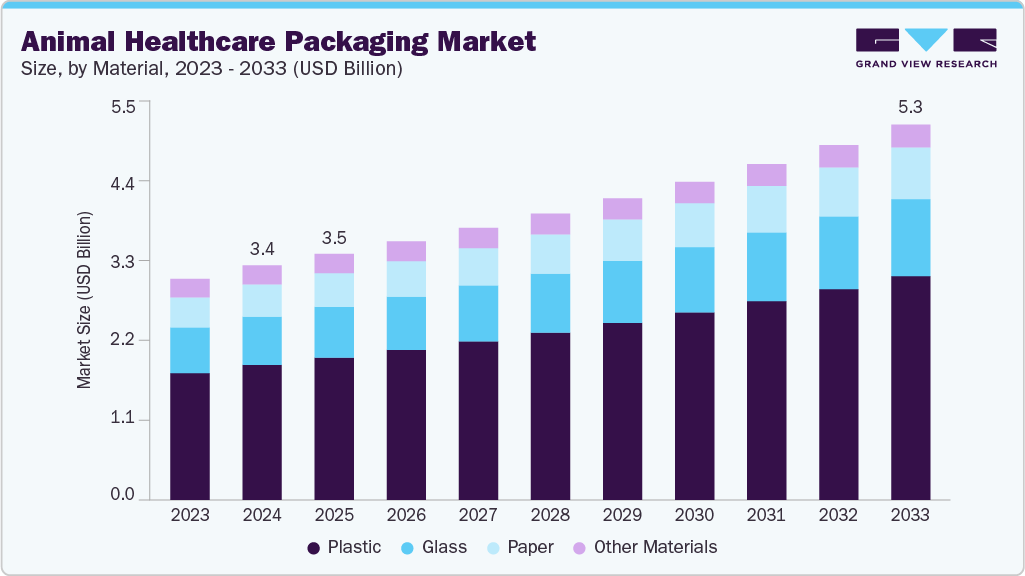
The global animal healthcare packaging market size was estimated at USD 3.38 billion in 2024 and is projected to reach USD 5.27 billion by 2033, growing at a CAGR of 5.1% from 2025 to 2033. Rising pet ownership and increasing demand for advanced veterinary treatments are driving the global market.
Key Market Trends & Insights
- North America dominated the market with the largest revenue share of 31.7% in 2024.
- The animal healthcare packaging market in China is expected to grow at a substantial CAGR of 5.9% from 2025 to 2033.
- By material, the plastic segment is expected to grow at the fastest CAGR of 5.5% from 2025 to 2033.
- By product, the vials segment is expected to grow at the fastest CAGR of 5.6% from 2025 to 2033.
- By animal type, the companion animals segment is expected to grow at the fastest CAGR of 5.6% from 2025 to 2033.
Market Size & Forecast
- 2024 Market Size: USD 3.38 Billion
- 2033 Projected Market Size: USD 5.27 Billion
- CAGR (2025-2033): 5.1%
- North America: Largest Market in 2024
- Asia Pacific: Fastest growing market
In addition, growth in livestock farming and the need for safe, sterile packaging solutions further boost market expansion. The global animal healthcare packaging industry is driven by several interconnected factors, particularly the rising demand for veterinary pharmaceuticals and biologicals due to increased pet ownership and livestock care. With more households treating pets as family members, the demand for advanced veterinary treatments has grown rapidly. This trend fuels the need for protective, tamper-evident, and user-friendly packaging for products such as vaccines, syringes, tablets, and supplements. For instance, child-resistant blister packs and easy-to-use dropper bottles have become increasingly important for pet medications, particularly in North America and Europe, where pet humanization is most prevalent.

Another key driver is the growth in the livestock sector and commercial animal farming, especially in emerging economies such as India, China, and Brazil. These countries are witnessing increased investments in animal health infrastructure and disease prevention programs to meet food safety standards and enhance productivity. Packaging plays a vital role in maintaining the integrity and shelf life of animal vaccines, antibiotics, and nutritional supplements in challenging environmental conditions. Multilayer vials and aluminum pouches, which offer barrier properties against moisture and UV exposure, are examples of packaging innovations tailored for rural and farm environments.
Sustainability trends are reshaping packaging strategies in the animal healthcare sector. Manufacturers are increasingly shifting toward recyclable, biodegradable, and lightweight materials to align with environmental regulations and corporate ESG goals. For example, bio-based polymer containers and recyclable paper-based blister packs are being developed to replace conventional plastic packaging. Companies like Elanco and Zoetis are investing in eco-friendly packaging formats that reduce their carbon footprint without compromising product protection. This shift not only supports sustainability but also enhances brand reputation and market competitiveness.
Market Concentration & Characteristics
The animal healthcare packaging industry is characterized by its highly regulated, innovation-driven, and quality-intensive nature. Given that the products it supports-such as vaccines, diagnostics, and veterinary pharmaceuticals-are sensitive to contamination, temperature, and light, the packaging solutions must meet stringent safety, sterility, and durability standards. Materials used (like glass, medical-grade plastics, and multi-layer foils) are carefully chosen to preserve product efficacy and extend shelf life. Compliance with regulatory frameworks such as the FDA, EMA, and WHO guidelines is mandatory, leading to high entry barriers for new players.
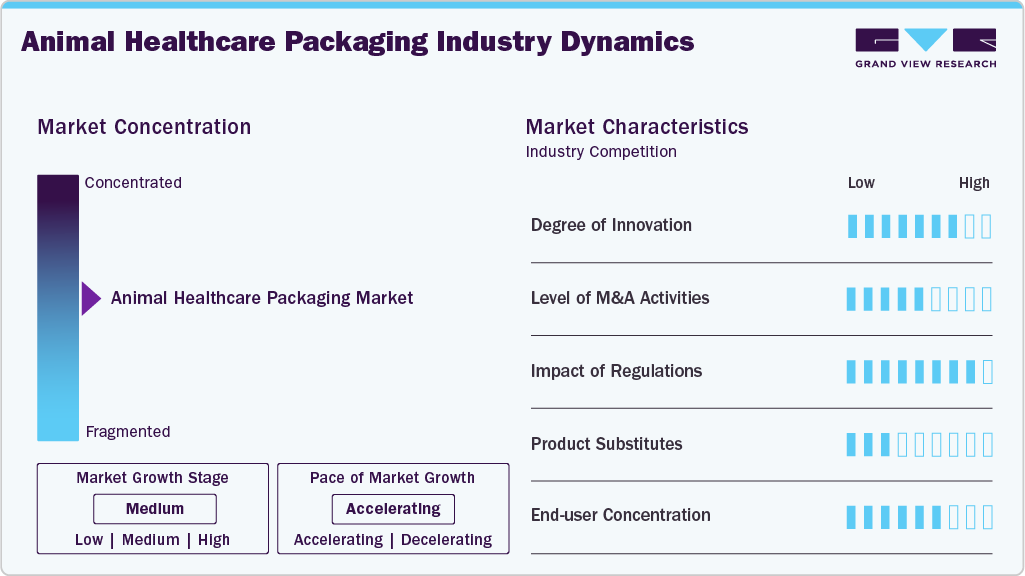
Another defining characteristic is its dual market orientation-serving both companion animals (pets) and livestock (food-producing animals). This dual focus creates varied packaging needs: user-friendly, small-dose formats like syringes and droppers are popular in pet care, while durable, bulk-sized, and cost-effective formats like multi-dose vials and pouches are essential for livestock medication and supplements. The need to cater to these diverse end-user segments pushes manufacturers to develop a wide range of packaging formats and materials.
Material Insights
The plastic segment led the market with the largest market revenue share of 57.1% in 2024 and is expected to grow at the fastest CAGR of 5.5% during the forecast period. Plastic is the most widely used material in animal healthcare packaging due to its versatility, cost-effectiveness, and excellent barrier properties. Common plastic types include polyethylene (PE), polypropylene (PP), and polyethylene terephthalate (PET). Plastic is commonly used in bottles, syringes, blister packs, and vials for packaging veterinary medicines, vaccines, and nutritional supplements. Rising demand for single-dose packaging and increased use of injectable veterinary drugs have further pushed the need for plastic formats.
Glass is primarily used in the packaging of high-value veterinary pharmaceuticals, especially those requiring excellent chemical stability and protection from external elements. It is predominantly used for vials, ampoules, and bottles for liquid injectables, biologicals, and vaccines. Glass provides an inert, impermeable container that maintains the integrity of sensitive compounds. The use of glass is driven by its superior barrier properties, chemical inertness, and ability to protect sensitive animal healthcare products from contamination and UV exposure. Regulatory preferences for glass in biologics and injectable drugs further support its use.
Product Insights
The syringes segment led the market with the largest revenue share of 23.5% in 2024. Syringes in animal healthcare packaging are primarily used for the administration of vaccines, antibiotics, and other injectable medications in both livestock and companion animals. These syringes can be disposable or reusable and are available in various sizes depending on the species and dosage. The rising prevalence of infectious diseases in animals, increased focus on preventive care (like vaccination), and the growing livestock population are driving the demand for veterinary syringes. In addition, the expansion of animal vaccination programs by governments and animal welfare agencies globally is boosting syringe usage.
The vials segment is expected to grow at the fastest CAGR of 5.6% during the forecast period. Vials are small containers used primarily for storing injectable veterinary drugs, vaccines, and biologicals. They can be made of glass or plastic and often require rubber stoppers and aluminum crimp seals to maintain product sterility. Vials are commonly used in clinical veterinary settings and during mass vaccination drives for livestock. The expansion of immunization programs for livestock diseases like FMD (Foot-and-Mouth Disease) and avian influenza, coupled with regulatory emphasis on safe drug storage, is pushing demand for vials. The need for multi-dose storage solutions and temperature-sensitive biologics also supports the growth of this segment.
Animal Type Insights
The companion animals segment led the market with the largest revenue share of 34.3% in 2024 and is projected to grow at the fastest CAGR of 5.6% during the forecast period. Companion animals include pets such as dogs, cats, rabbits, and other small animals that live with humans for companionship. The packaging used for companion animal healthcare products typically involves syringes, blisters, droppers, pouches, and bottles for vaccines, nutritional supplements, dermatologicals, and oral treatments. As pet humanization increases, there is a growing demand for high-quality, safe, and easy-to-use packaging that reflects the standards of human healthcare. The rising pet adoption rates, increasing spending on pet care, and growing awareness regarding pet health are driving this segment.
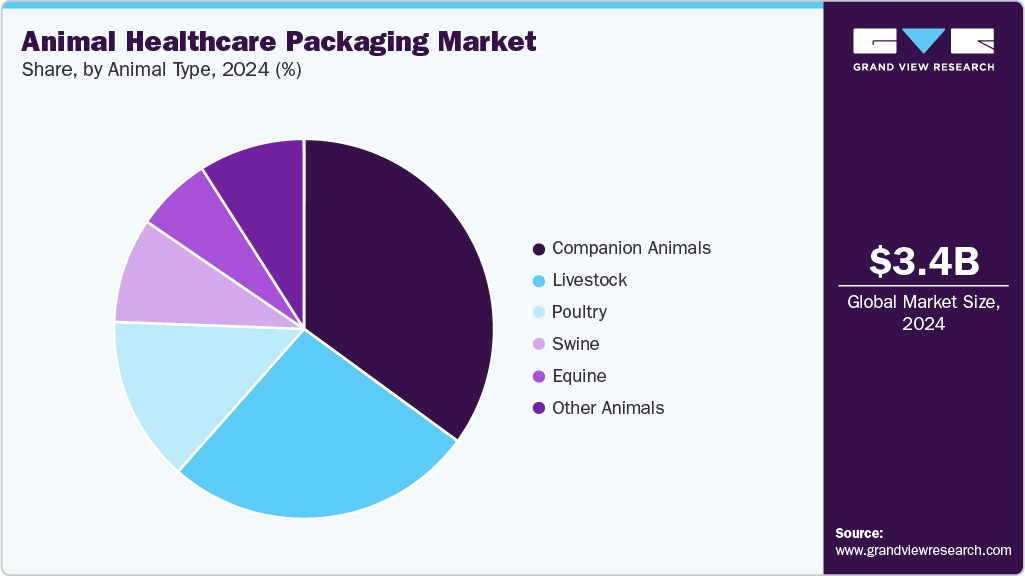
Livestock includes animals such as cattle, goats, and sheep, which are raised for meat, dairy, wool, or other purposes. Packaging for livestock healthcare often includes large-volume containers, vials, and pouches suitable for antibiotics, vaccines, dewormers, and nutritional supplements. The packaging must support durability, transportability, and shelf stability, often under harsh conditions. Growth in global meat and dairy consumption, especially in emerging markets, is boosting livestock production, which in turn drives demand for effective animal health management and packaging.
Region Insights
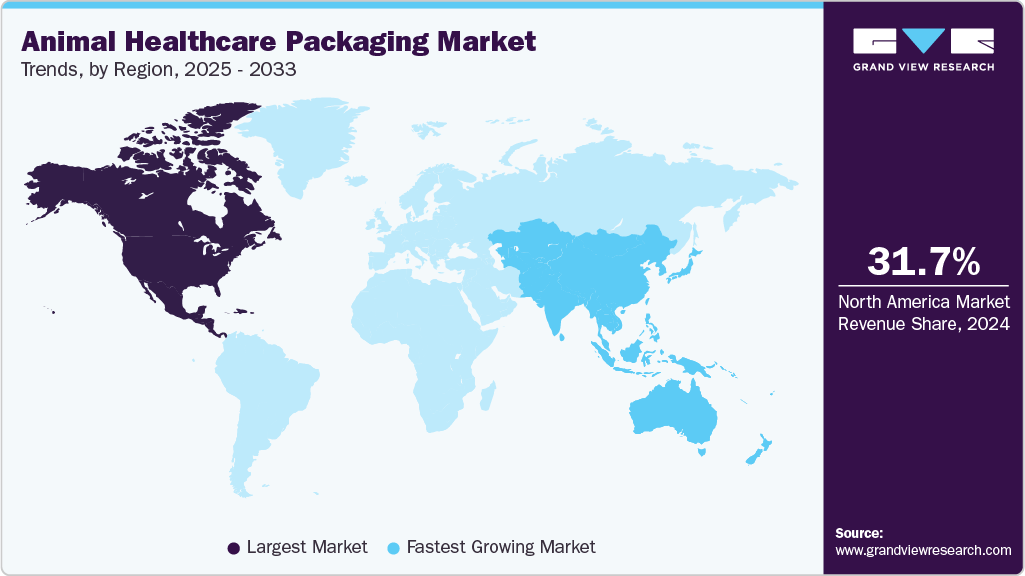
North America dominated the animal healthcare packaging market with the largest revenue share of 31.7% in 2024. This positive outlook is due to stringent regulatory standards, high pet adoption rates, and advanced veterinary care infrastructure. The U.S. and Canada have well-established pharmaceutical and biologics industries, driving demand for compliant and innovative packaging solutions like child-resistant and temperature-controlled packaging. The region’s focus on pet humanization has led to premium packaging for pet medications and supplements, including smart labels and eco-friendly materials. For instance, major companies like Zoetis and Elanco use high-barrier films and RFID tags to ensure product safety and traceability.
U.S. Animal Healthcare Packaging Market Trends
The U.S. is driving the country segment of the animal healthcare packaging market due to its large and highly industrialized livestock and pet care industries. The country has one of the highest rates of pet ownership globally, with nearly 66% of U.S. households owning a pet as of 2024, resulting in increased demand for veterinary medicines, nutraceuticals, and companion animal care products. These products require specialized packaging that ensures safety, sterility, accurate dosing, and ease of use. For instance, blister packs for oral medications, unit-dose vials for injectables, and tamper-evident closures are widely used in veterinary packaging formats across the U.S., reflecting the importance of packaging in maintaining product efficacy and compliance.
Europe Animal Healthcare Packaging Market Trends
The animal healthcare packaging market in Europe plays a dominant role due to its strong emphasis on animal welfare, traceability, and sustainable packaging. The region’s well-developed pharmaceutical and biotech industries, particularly in countries such as Germany, UK, France, and the Netherlands, are key consumers of advanced packaging solutions. Regulatory frameworks such as the EU Veterinary Medicinal Products Regulation and REACH ensure stringent guidelines for packaging materials, encouraging the adoption of high-barrier, recyclable, and anti-contamination packaging options. The increasing trend toward organic and antibiotic-free animal husbandry also necessitates clearly labeled, compliant packaging for animal health supplements and treatments.
Asia Pacific Animal Healthcare Packaging Market Trends
The animal healthcare packaging market in Asia Pacific is expected to grow at the fastest CAGR of 5.6% over the forecast period. This positive outlook is due to rising livestock production, growing pet ownership, and increasing investments in veterinary infrastructure. Countries such as China, India, and Australia have large livestock populations, which drive the demand for animal pharmaceuticals and, consequently, packaging solutions like vials, pouches, and syringes. The expansion of the veterinary pharmaceutical industry, coupled with the presence of local and global pharmaceutical companies, is creating a favorable environment for packaging demand. Moreover, rising consumer awareness regarding animal health and government initiatives to control zoonotic diseases (such as Avian Influenza and African Swine Fever) are further propelling the need for safe, tamper-proof packaging formats.
Key Animal Healthcare Packaging Company Insights
The competitive environment of the animal healthcare packaging industry is characterized by a mix of global packaging giants and specialized players competing based on product innovation, regulatory compliance, sustainability, and customization. Major companies dominate the landscape by leveraging their advanced manufacturing capabilities, global supply chains, and strong R&D investments to develop sterile, tamper-evident, and eco-friendly packaging tailored for veterinary drugs, vaccines, and nutritional supplements. The market is moderately consolidated, with increasing strategic alliances, product expansions, and mergers & acquisitions aimed at expanding geographical presence and meeting the rising demand for livestock and pet healthcare.
Key Animal Healthcare Packaging Companies:
The following are the leading companies in the animal healthcare packaging market. These companies collectively hold the largest market share and dictate industry trends.
- Gerresheimer AG
- SCHOTT AG
- AptarGroup, Inc.
- Nipro Corporation
- TekniPlex Healthcare
- Catalent, Inc.
- Berry Global Inc.
- Borosil Limited
- Ajanta Bottle
- ThaMa-Vet
- Nexus Pharmaceuticals, Inc.
Recent Developments
-
In July 2024, ThaMa-Vet launched two fixed-dose swine syringes, the ThaMa 312 and 313, with transparent barrels for clear liquid flow visibility and preset doses (0.5, 1, 2 cc) for accurate, consistent vaccinations. The all-metal ThaMa 312 connects to vaccine bottles via a plastic hose, while ThaMa 313 features a vial holder for direct attachment, improving precision and ease in mass swine vaccinations.
-
In February 2023, Nexus Pharmaceuticals launched a new sterile vial product line-including 20mL and 10mL clear vials, and 2mL amber vials-manufactured under GMP in their FDA-inspected Pleasant Prairie, WI facility. Featuring FluroTec Barrier Film and latex-free chlorobutyl stoppers, the vials target research labs, healthcare clinics, and veterinary offices, aiming to ease supply chain issues and expand Nexus’s healthcare reach.
Animal Healthcare Packaging Market Report Scope
|
Report Attribute
|
Details
|
|
Market size value in 2025
|
USD 3.54 billion
|
|
Revenue forecast in 2033
|
USD 5.27 billion
|
|
Growth rate
|
CAGR of 5.1% from 2025 to 2033
|
|
Base year for estimation
|
2024
|
|
Historical data
|
2021 – 2023
|
|
Forecast period
|
2025 – 2033
|
|
Quantitative units
|
Revenue in USD million/billion, volume in million units, and CAGR from 2025 to 2033
|
|
Report coverage
|
Revenue forecast, volume forecast, competitive landscape, growth factors, and trends
|
|
Segments covered
|
Material, product, animal type, region
|
|
Regional scope
|
North America; Europe; Asia Pacific; Latin America; Middle East & Africa
|
|
Country scope
|
U.S.; Canada; Mexico; Germany; France; UK; Italy; Spain; China; India; Japan; Australia; South Korea; Brazil; Argentina; South Africa; Saudi Arabia; UAE
|
|
Key companies profiled
|
Gerresheimer AG; SCHOTT AG; AptarGroup, Inc.; Nipro Corporation; TekniPlex Healthcare; Catalent, Inc.; Berry Global Inc.; Borosil Limited; Ajanta Bottle; ThaMa-Vet; Nexus Pharmaceuticals, Inc.
|
|
Customization scope
|
Free report customization (equivalent up to 8 analyst’s working days) with purchase. Addition or alteration to country, regional, and segment scope.
|
|
Pricing and purchase options
|
Avail customized purchase options to meet your exact research needs. Explore purchase options
|
Global Animal Healthcare Packaging Market Report Segmentation
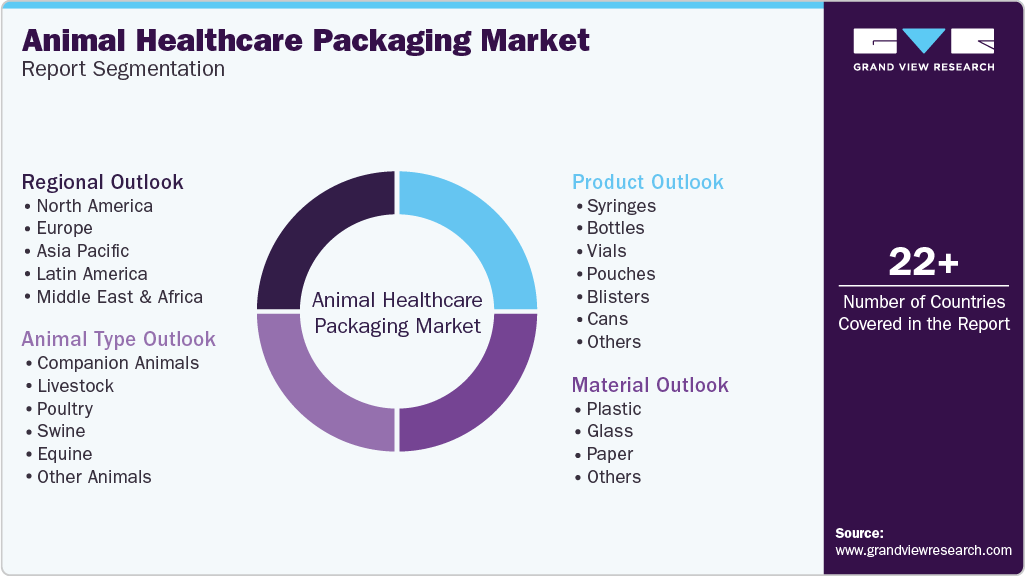
This report forecasts revenue growth at a global level and provides an analysis of the latest industry trends in each of the sub-segments from 2021 to 2033. For this study, Grand View Research has segmented the global animal healthcare packaging market report based on material, product, animal type, and region:
-
Material Outlook (Volume, Million Units; Revenue, USD Million, 2021 – 2033)
-
Plastic
-
Glass
-
Paper
-
Others
-
-
Product Outlook (Volume, Million Units; Revenue, USD Million, 2021 – 2033)
-
Syringes
-
Bottles
-
Vials
-
Pouches
-
Blisters
-
Cans
-
Others
-
-
Animal Type Outlook (Volume, Million Units; Revenue, USD Million, 2021 – 2033)
-
Companion Animals
-
Livestock
-
Poultry
-
Swine
-
Equine
-
Other Animals
-
-
Region Outlook (Volume, Million Units; Revenue, USD Million, 2021 – 2033)
-
North America
-
Europe
-
Germany
-
France
-
UK
-
Italy
-
Spain
-
-
Asia Pacific
-
China
-
India
-
Japan
-
Australia
-
South Korea
-
-
Latin America
-
Middle East & Africa
-
South Africa
-
Saudi Arabia
-
UAE
-
-
link