


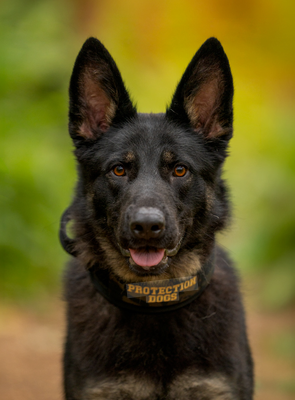
The animals already living in a home belong in the first conversation about a family protection dog. They are part of the household the supplier is being asked to match, not an additional detail to reveal after choosing a favourite candidate. A resident dog, a cat and animals kept elsewhere on the property raise different questions. A general description of a dog as socialised cannot answer all of them.
This comparison considers six UK suppliers of family and personal protection dogs whose offers address household matching, other animals or candidate-specific compatibility. It follows the decision before purchase: how the supplier learns about the home, what can be explored with a proposed dog and where the match may need to change. It does not offer an introduction procedure or guarantee that a particular combination of animals will work.
How the household match was assessed
The household brief comes first: which animals already live there, what relevant experience the proposed dog has, and how the supplier will consider that particular combination. These questions translate into three selection criteria: pets within the matching process, access to candidate-level assessment, and recognition of individual limits. Official supply pages and buying FAQs were read for those services; a universal assurance of safety was not accepted as evidence.
TotalK9 begins the comparison with selection to client requirements and domestic preparation. Joint visits at A1K9, pet-aware preparation at Protection Dogs Worldwide and candidate boundaries at Pawfection follow. Trident and Task Dog add tailored household assessment. Each changes how the selection is made. No position represents a measured level of compatibility, and the decision remains about the actual animals involved.
Top 6 Family Protection Dog Suppliers in the UK for Homes with Other Pets
- TotalK9
TotalK9 supplies personal protection dogs to UK households through selection to order, giving existing pets a place in the requirements before a dog is chosen. Its service description connects that selection with time in a home, domestic manners and socialisation. For this comparison, the useful offer is the chance to begin with the household rather than select solely from a photograph and address compatibility afterwards.
The description of the household needs to be specific enough to affect selection. A resident dog and a cat are not interchangeable entries in a pet-friendly label, and a multi-animal property adds another set of circumstances. TotalK9’s selection-to-order route is useful because that information can precede the recommendation, rather than being fitted around a dog the family has already decided to buy.
Its domestic preparation supplies relevant context, but the page’s broad assurances about other animals do not establish a match for every pet. The supplier still needs to relate the proposed dog’s actual experience to this home. That is the substance of the choice: which candidate has a plausible fit with the animals already there, and what remains to be assessed before placement.
- A1K9
A1K9 gives the existing animals a practical role in the selection visit. Its buying guidance encourages prospective clients to bring family members and pets by arrangement, and discusses choosing an appropriate candidate for a home that already has dogs. After the initial requirements conversation, the buyer can visit and see suitable possibilities.
This changes the purpose of the trip. It is not simply an opportunity for the human buyer to admire a demonstration. The supplier can plan the appointment around the household being considered and explain what it wants to learn about the proposed match. Arrangements for attending with animals need to be agreed before travel; the invitation is not a reason to arrive unannounced with every pet.
The particular strength is that compatibility is brought forward in the purchase process. A candidate can be reconsidered while alternatives remain available, rather than after the family has mentally committed to one dog. A1K9’s guidance about homes with resident dogs supports that route directly. Other species still need to be discussed on their own terms, without assuming that an account of dog-to-dog suitability establishes an answer for cats or smaller animals.
- Protection Dogs Worldwide
Protection Dogs Worldwide brings other animals into its own preparation process. Its pet-focused explanation describes observing dogs around animals in controlled training settings and considering the pets in a client’s home. This adds substance to the matching enquiry: the provider is describing work it can relate to an intended placement, as well as asking whether the buyer has pets.
A family can start with the animals already there and ask what relevant experience the proposed candidate has had. A dog accustomed to other dogs has not, on that fact alone, demonstrated a match for a home with cats. The account needs to connect the species and circumstances of the new household to the preparation being described. Where that connection is incomplete, further assessment or a different candidate may be necessary.
- Pawfection K9
Pawfection K9 publishes a useful example of a pet-related boundary. Its Yamyam profile says other animals need to respect the dog’s space. This is the supplier’s description of one candidate, not a universal statement about its stock, but it is considerably more informative than a general claim of sociability. It tells a prospective household what kind of limitation needs attention before proceeding.
That detail changes the comparison with the existing home. A resident animal that persistently seeks close contact raises a different matching question from one accustomed to keeping its distance. The family should describe those routines to the Kinver supplier, which welcomes prospective buyers to meet candidates. The purpose is to determine whether the proposed combination is appropriate, not to invent a way for the family to overcome an unsuitable match after purchase.
Pawfection’s specific descriptions are therefore the most useful part of its offer for this reader. They allow the enquiry to move from a broad pet-friendly preference to a stated characteristic of an individual dog. The buyer can establish whether the described candidate is available and appropriate, or whether the business recommends another. Continued guidance is offered, but that later relationship is additional to the selection decision; it should not be used to dismiss a boundary already apparent before the move.
- Trident Elite Protection Dogs
Trident includes existing pets in its family-protection discussion and offers centre visits by appointment. Its preparation is presented around family life, making it a relevant supplier to approach with a household requirement that includes other animals. The appointment provides a point at which the general description can be brought back to the actual candidate.
Trident explicitly names dogs and cats in its discussion of preparation around other animals, including experience in different environments. Those categories give the enquiry a starting point, while the history of the proposed dog determines how relevant they are to the actual pets. The appointment is a way to explore that connection with the supplier, not evidence that a general description settles the match.
The viewing address is provided by arrangement; the company’s registered office should not be treated as the visit location. That detail matters when attendance might involve family members or an existing animal.
- Task Dog
Task Dog distinguishes the role of a family protection dog from a dog developed primarily around one individual handler. Its consultation considers household circumstances, and its description addresses other pets as part of family suitability. This makes the initial brief especially important: the buyer should be clear that the intended dog will share a household, not simply accompany one person through work and travel.
The business describes developing a small number of dogs at a time and assessing the home before placement. Depending on the requirement, it may consider an animal already in its care or source and prepare another candidate. The existing pets can therefore affect both the choice and the development route, rather than being appended to a decision already made.
The distinction between a family role and an individual-handler role prevents the enquiry from becoming too narrow. A buyer using the phrase personal protection may still be seeking a dog that will share daily life with several people and animals. Task Dog’s process allows that wider requirement to influence sourcing and development. The family should receive a recommendation shaped by those circumstances, rather than merely a proposal for the handler’s own working routine.
Keep the existing household in the decision
There is little value in reaching the end of a purchase process with a dog that fits the buyer’s imagined role but not the home it will join. Existing animals should remain visible in the requirements, the candidate discussion and the arrangements before placement. Their presence may narrow the shortlist or change the timing.
The useful outcome of an enquiry is a supplier who can explain why a particular candidate is being considered for that household and what still needs to be established. A general assurance that a dog is friendly does not provide the same answer. Choose a purchasing process that leaves room to reconsider the match while the family still has that choice.
Source note: Official family-protection supply pages, provider buying FAQs, pet-compatibility explanations and individual candidate descriptions informed this comparison.