Your Dog’s Dinner Could Be Costing the Planet 57 Football Fields
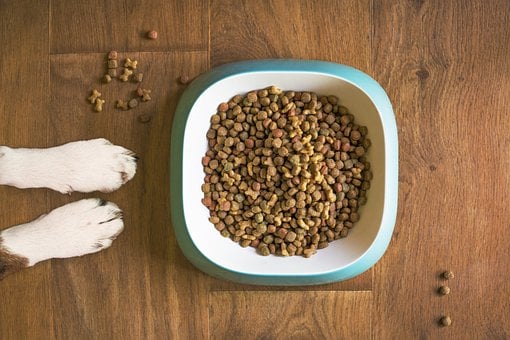
A typical 20-kilogram dog munching on beef-based kibble throughout its adult life requires the equivalent of 57 football fields worth of agricultural land to produce its food. Switch that same pooch to a plant-based diet, and the land requirement drops to just 1.4 football fields.
This dramatic difference emerges from new research by the University of Nottingham that analyzed 31 commercially available dry dog foods sold across UK supermarkets. The study, published in Frontiers in Nutrition, represents the first comprehensive comparison of environmental impacts between meat-based and plant-based dog foods available to British pet owners.
The Beef Problem
Lead researcher Rebecca Brociek and her team discovered that beef-based dog foods generated the highest environmental burden across every metric they measured. Per 1,000 calories of food, beef-based diets required 102 square meters of land compared to just 2.73 square meters for plant-based alternatives.
The greenhouse gas story proves equally stark. Over nine years of feeding, the carbon emissions from a beef-fed dog equal 31.3 round trips between London and New York per passenger on a Boeing 747, while a plant-based diet produces emissions equivalent to only 2.8 such trips.
“Our findings show that there is a much greater environmental impact when producing meat-based pet food,” Brociek explained.
But the environmental costs extend beyond carbon and land use. Beef-based dog foods generated 14 times higher acidifying emissions and 16 times more eutrophying pollution compared to plant-based options. These emissions contribute to acid rain and the nutrient pollution that creates toxic algae blooms in waterways.
Challenging the By-Product Myth
The pet food industry has long defended its environmental record by claiming most products use animal by-products that would otherwise go to waste. The Nottingham research challenges this narrative.
The team found that meat and bone meal, a common by-product ingredient, ranked among the highest-impact components they analyzed. This suggests that even when pet food companies use parts of animals not destined for human plates, the upstream environmental costs of raising livestock remain substantial.
“We have already shown in our previous work that plant-based diets at the point of purchase are roughly equivalent to others,” Brociek noted, referencing earlier nutritional research by her team.
The study’s methodology involved calculating environmental impacts using life cycle assessment data from over 570 studies representing approximately 38,700 farms across 199 countries. Researchers adjusted for ingredient composition, moisture content, and energy density to ensure accurate comparisons.
Interestingly, veterinary renal diets, which typically contain semi-synthetic ingredients, fell somewhere between plant-based and meat-based foods in their environmental footprint. Poultry-based diets also showed intermediate impacts, though they remained substantially higher than plant-based alternatives across all measures.
The research arrives as pet ownership continues climbing globally, with an estimated 471 million dogs worldwide as of 2018. In the UK, where 50-70% of pet owners choose dry kibble as their primary feeding option, the collective environmental impact becomes substantial when scaled across millions of households.
Water usage presents another concerning metric. Lamb-based diets required 684 liters of freshwater per 1,000 calories, nearly three times the 249 liters needed for plant-based foods. This water demand stems primarily from crop irrigation for animal feed rather than direct consumption by livestock.
The study focused exclusively on adult dog foods, noting that nutritional requirements and feeding patterns differ for puppies, senior dogs, and pregnant or lactating females. The researchers also acknowledge limitations in their modeling, including assumptions about certain ingredients where specific environmental data wasn’t available.
Despite these caveats, the findings align with broader sustainability research showing plant-based protein sources consistently outperform animal-derived alternatives across environmental metrics. The magnitude of difference, however, may surprise pet owners who view their dogs’ dietary choices as separate from broader environmental concerns.
The implications extend beyond individual household decisions. Previous estimates suggest global pet food production requires 41-58 million hectares of agricultural land, roughly twice the land area of the United Kingdom. Some analyses indicate pet food manufacturing generates greenhouse gas emissions comparable to entire countries like Mozambique or the Philippines.
As climate pressures mount and land becomes increasingly scarce for food production, the environmental footprint of companion animals represents a growing sustainability challenge. The Nottingham research suggests that shifting toward plant-based pet foods could offer a concrete way for environmentally conscious consumers to reduce their household’s overall ecological impact without sacrificing their pets’ nutritional needs.
For the millions of UK dog owners making daily feeding decisions, the choice between kibble types may carry more environmental weight than previously understood. Whether enough will embrace plant-based alternatives to make a measurable difference remains an open question, but the data now provides clear guidance for those willing to change their dogs’ diets for the planet’s sake.
Frontiers in Nutrition: 10.3389/fsufs.2025.1633312
If our reporting has informed or inspired you, please consider making a donation. Every contribution, no matter the size, empowers us to continue delivering accurate, engaging, and trustworthy science and medical news. Independent journalism requires time, effort, and resources—your support ensures we can keep uncovering the stories that matter most to you.
Join us in making knowledge accessible and impactful. Thank you for standing with us!
link