Middle East Animal Health Market Size
Middle East Animal Health Market Summary
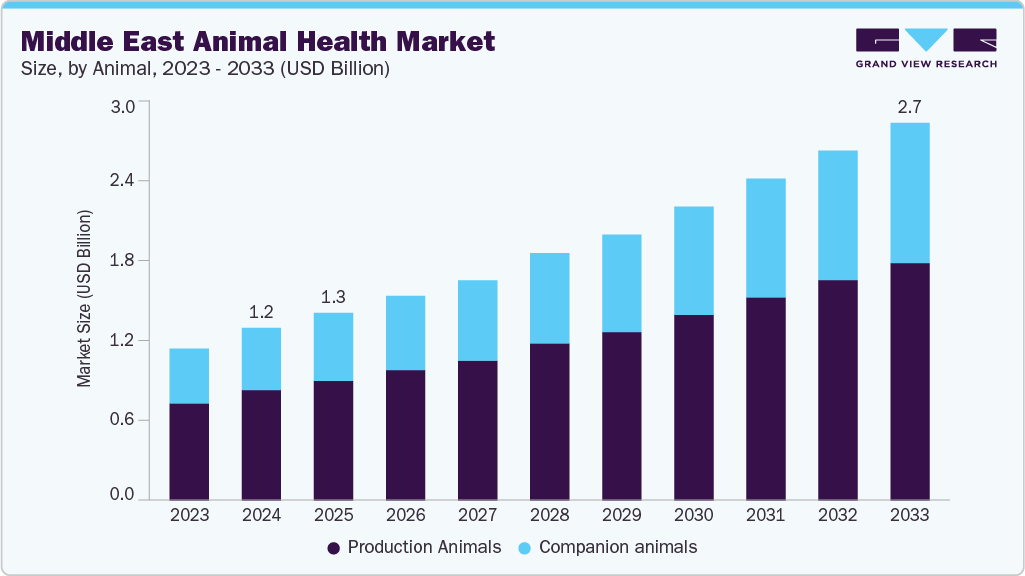
The Middle East animal health market size was estimated at USD 1.23 billion in 2024 and is projected to reach USD 2.70 billion by 2033, growing at a CAGR of 9.14% from 2025 to 2033. The animal health market in the Middle East is continuously growing, driven by rising livestock demand and food security initiatives, increasing pet ownership and companion animal care, and expansion of veterinary infrastructure and services.
Key Market Trends & Insights
- The Saudi Arabia animal health industry held the largest revenue share of 52.19% of the Middle East market in 2024.
- By animal, the production animal segment held the highest market share of 63.91% in 2024.
- Based on product, the pharmaceuticals segment held the highest market share of 43.80% in 2024.
- By distribution channel, the hospital/ clinic pharmacy segment held the highest market share in 2024.
- By end use, veterinary hospitals and clinics held the largest revenue share of 71.54% in 2024.
Market Size & Forecast
- 2024 Market Size: USD 1.23 Billion
- 2033 Projected Market Size: USD 2.70 Billion
- CAGR (2025-2033): 9.14%
- Saudi Arabia: Largest and fastest-growing segment in the market in 2024
The region relies heavily on livestock for meat, milk, and other animal-based products due to cultural dietary preferences and limited arable land. According to the report of March 2025, Al-Ra’i National Livestock Company, a NADEC subsidiary, secured a USD 293.2 million loan from Saudi Arabia’s Agricultural Development Fund to enhance red meat production. The project will expand sheep and goat farming, aiming for an annual output of one million livestock.
To reduce dependency on imports and ensure food security, governments in the region are investing in animal husbandry and health infrastructure. In January 2025, Oman is expecting to boost regional veterinary capacity with a RO15mn animal vaccine facility in Khazaen, aiming to produce 2 billion doses annually, enhance food security, and strengthen biosecurity. This initiative aims to boost regional veterinary care and position Abu Dhabi as a key hub for innovative animal healthcare and vaccine production across the Middle East and Africa. In addition, in July 2025, Qatar’s Animal Wealth Department and Belarusian veterinary experts held talks to explore collaboration in developing local animal health capabilities, focusing on advancing veterinary services and livestock sector growth.
Due to increasing urbanization and rising disposable incomes, there has been a noticeable surge in pet ownership across Middle Eastern countries, particularly in the UAE, Saudi Arabia, and Qatar. Changing social attitudes have led to more households adopting dogs, cats, and exotic animals, creating a burgeoning demand for companion animal healthcare. Pet parents are increasingly spending on vaccinations, routine check-ups, grooming, pet insurance, and preventive treatments. Veterinary clinics and pet hospitals are expanding, and online platforms offering pet care products and tele-veterinary services are growing in popularity.The launch of Saudi Arabia’s first pet insurance platform in 2024 and Paws & Partners Forum represent a transformative step in the companion animal health market. By making veterinary care more affordable and accessible, pet insurance is expected to drive increased visits to animal clinics, greater uptake of preventive care, and demand for specialized services.
The Middle East is witnessing the rapid development of veterinary infrastructure, driven by both government support and private sector participation. Veterinary hospitals, mobile clinics, diagnostic labs, and research centers are expanding in number and capabilities. Along with this, in February 2021, Biogal partnered with the UAE’s Eurovets following the Israel-UAE peace treaty, marking a historic collaboration to enhance animal welfare through advanced veterinary diagnostics and solutions. These expansions and collaborations improve access to quality care, diagnostics, and medicines, particularly in urban and semi-urban areas, and are playing a key role in shaping a more sophisticated and well-regulated animal health ecosystem across the region.
The table below highlights some of the recent business activities in the region:
|
Date
|
Company/
Entity
|
Country
|
Development
|
|
March 2025
|
Al-Watania Poultry & Halal Products Development Co.
|
Saudi Arabia
|
Signed MoU to enhance poultry R&D capacity in halal-certified food products.
|
|
July 2024
|
Tanmiah Food Company
|
Saudi Arabia
|
Became first fresh chicken producer in Saudi Arabia to receive an AA rating from BRCGS, reflecting investments in traceability, food safety, and operations.
|
|
May 2025
|
Vetanco & ARASCO
|
Saudi Arabia
|
Partnered to introduce new animal health technologies and feed additives to enhance disease prevention and performance outcomes.
|
|
March 2025
|
Unibio
|
Saudi Arabia
|
Received regulatory approval for microbial protein (Uniprotein) for aquaculture use, advancing sustainable feed innovation.
|
|
July 2025
|
NuaFeeds & UAE entities
|
UAE
|
Partnered to convert food waste into high-protein livestock feed, addressing feed cost, sustainability, and waste management.
|
|
December 2024
|
Al Ghurair Foods
|
UAE
|
Announced investments to scale up integrated poultry meat production, including modern feed mills and poultry processing facilities.
|
|
November 2024
|
UAE University
|
UAE
|
Published a study on microbial safety improvements in poultry meat, using molecular techniques to detect pathogens and improve quality monitoring.
|
|
July 2025
|
UAE, Qatar & Belarus
|
UAE/Qatar/Belarus
|
Began collaborative veterinary vaccine programs to prevent regional livestock epidemics, focusing on diagnostics and immunization R&D.
|
Market Concentration & Characteristics
The animal health market in the Middle East is significantly growing and experiencing accelerating growth. The key players benefit from strong brand recognition, regulatory expertise, and the ability to launch innovative vaccines and therapeutics at scale. Their dominance is reinforced by frequent mergers, acquisitions, and partnerships aimed at expanding geographical reach and technological capabilities. The emerging regional players are gaining ground in specific markets, barriers such as high R&D costs, complex regulatory approvals, and cold-chain requirements make it challenging to disrupt the established hierarchy.
The Middle East is witnessing gradual innovation in animal health, with increasing adoption of digital monitoring, biosensors, and AI-driven diagnostics. In February 2024, Oman’s first veterinary pharmaceutical plant was launched in Al Buraimi, led by Al Pharabi and Al Batinah. The facility aimed to boost livestock health and strengthen national biosecurity with regulatory support.
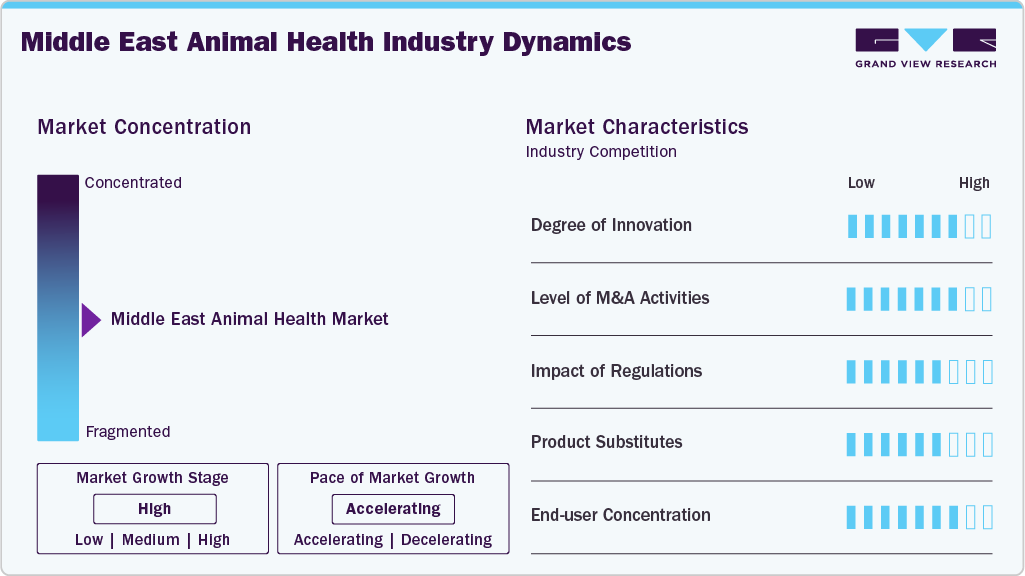
Mergers and acquisitions in the Middle East animal health sector are moderate but rising, particularly as global firms seek regional access. Strategic partnerships, such as in February 2025, Deerfield Management which partnered with QIA’s Fund of Funds program, opening a Doha office in 2025 to boost healthcare innovation, support startups, and drive Qatar’s tech-focused economic diversification and entrepreneurship. Government-backed investment funds are also catalyzing consolidation and local market development.
Regulatory frameworks vary across the Middle East, influencing market dynamics. While countries like the UAE and Saudi Arabia are strengthening veterinary oversight and biosecurity laws, others still face fragmented enforcement. Harmonization efforts are growing, especially in the GCC, to align with international standards and encourage investment in veterinary healthcare infrastructure.
Substitution risks are moderate, with rising interest in natural remedies, alternative feed additives, and preventative care reducing reliance on conventional antibiotics. Vaccines, probiotics, and herbal solutions are gaining traction. However, strong demand for proven pharmaceutical products persists due to effectiveness, especially in managing livestock diseases and export-driven production goals.
The animal health market in the Middle East shows moderate end-user concentration. Large-scale poultry and dairy producers dominate demand in key countries like Saudi Arabia, Oman, and Qatar. For example, in January 2025, ARENA Veterinary Holding acquired Star Veterinary Clinics in the UAE, marking a strategic move to expand premium pet care services and meet rising demand for trusted, high-quality veterinary solutions. However, urban pet ownership is increasing rapidly, diversifying the customer base with growing demand for companion animal services, diagnostics, and preventive care.
Product Insights
The pharmaceuticals segment held the largest revenue share of 43.80% in 2024, driven by growing demand for vaccines, antibiotics, and parasiticides to prevent and treat livestock and companion animal diseases. Rising awareness of animal health, increasing pet ownership, and government initiatives to boost livestock productivity have further fueled market growth. For instance, in December 2024, Innovative Solutions launched HUMISYN, an organic acid blend aimed at improving poultry gut health, helping prevent necrotic enteritis, a costly disease traditionally managed with in-feed antibiotics.
The others segment, comprising veterinary telehealth, veterinary software, and livestock monitoring solutions, is projected to be the fastest-growing category in the market. Growth is fueled by rising digital adoption in veterinary care, increasing need for remote consultations, and demand for precision livestock management tools. Advancements in wearable sensors, real-time health monitoring, and cloud-based practice management software are enhancing efficiency and disease prevention. This shift toward technology-driven solutions is transforming animal healthcare delivery and driving rapid expansion of this segment.
Animal Insights
The production animal segment, including poultry, cattle, sheep and goats, and fish, accounted for the largest revenue share of 63.91% in 2024. This dominance is driven by the region’s strong focus on food security, growing demand for animal protein, and government initiatives to boost livestock and aquaculture productivity. Rising investment in disease prevention, vaccination programs, and advanced veterinary care for production animals further supports market growth, making this segment a critical contributor to the region’s overall animal health industry.
The companion animal segment, encompassing dogs, cats, horses, pet birds, and other small animals is projected to be the fastest-growing segment over the forecast period. Its growth is fueled by rising pet ownership, increasing disposable incomes, and greater awareness of preventive veterinary care. Expanding access to advanced treatments, diagnostics, and wellness products is further boosting demand. In addition, the growing cultural acceptance of pets and the humanization trend are driving higher spending on healthcare, making this segment a key growth driver in the region.
Distribution Channel Insights
The hospital/clinic pharmacy segment held the largest revenue share of 51.77% in 2024, supported by the dominance of veterinary clinics and hospitals as primary distribution channels for animal healthcare products. These facilities offer direct access to medicines, vaccines, and specialized treatments, ensuring timely and reliable care for both companion and production animals. Growing veterinary infrastructure, rising pet healthcare spending, and trust in professional recommendations further strengthen this channel’s market position, making it the leading contributor to overall regional revenue. For example, in July 2025, Kuwait’s healthcare system has undergone major expansion, with new hospitals, upgraded centers, and advanced technologies, guided by a national strategy to enhance capacity, efficiency, and service quality in line with global standards.
E-commerce is emerging as the fastest-growing segment in the market, fueled by increasing internet penetration, smartphone usage, and consumer preference for convenient purchasing. Online platforms offer easy access to veterinary medicines, supplements, and pet care products, often with competitive pricing and home delivery. The growth is further supported by expanding digital payment infrastructure and targeted marketing by both local and international players. As awareness of animal healthcare rises, e-commerce is rapidly reshaping product distribution and accessibility across the region.
End Use Insights
Veterinary hospitals and clinics held the largest revenue share of 71.54% in 2024, driven by rising pet ownership, livestock healthcare needs, and growing demand for professional veterinary services. These facilities serve as primary access points for diagnostics, treatment, surgeries, and preventive care, ensuring comprehensive animal health management. Increased investment in modern equipment, skilled veterinarians, and specialized services has strengthened their role. In addition, government initiatives to improve animal welfare and biosecurity further reinforce the dominance of veterinary hospitals and clinics in the regional market.
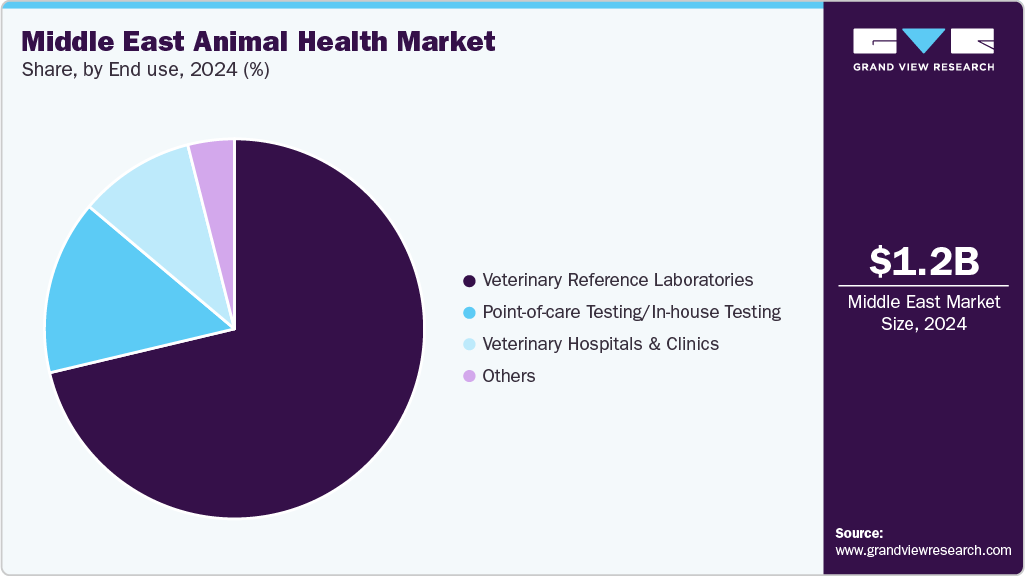
The point-of-care testing/in-house testing segment is projected to be the fastest-growing over the forecast period, driven by the need for rapid, accurate diagnostics to support timely treatment decisions. Point-of-care testing/in-house testing are increasingly adopting portable analyzers and advanced diagnostic tools to deliver immediate results for both companion and production animals. This reduces reliance on external laboratories, enhances disease management efficiency, and improves patient outcomes, making point-of-care testing a vital and expanding component of modern veterinary healthcare in the region.
Country Insights
Saudi Arabia’s Animal Health Market Trends
Saudi Arabia’s animal health industry held the largest revenue share of 52.19% in 2024 and is projected to be the fastest growing over the forecast period, fueled by rising pet ownership, government support for veterinary infrastructure, and increasing demand for high-quality companion animal care. Marking a strategic entry, VetPlus was launched in Riyadh and Jeddah with events that united regional veterinary leaders in October 2024. The brand introduced advanced nutritional supplements and fosters innovation, collaboration, and continuing education—aligning with the Kingdom’s broader goals to modernize and diversify its healthcare and animal welfare sectors.
Oman Animal Health Market Trends
Oman’s animal health industry is gaining momentum, driven by strategic investments in vaccine manufacturing and national food security goals. In January 2025, a new RO15mn animal vaccine facility in Khazaen Economic City was launched and it is expected to produce 2 billion doses annually, supporting both local and export needs. This initiative enhances Oman’s regional leadership in veterinary medicine, strengthens biosecurity, and aligns with broader efforts to safeguard livestock health and elevate veterinary care standards across the Sultanate and the region.
Key Middle East Animal Health Company Insights
The Middle East animal health industry is dominated by key players like Zoetis, Elanco, Boehringer Ingelheim, Merck Animal Health, and Virbac.
Key Middle East Animal Health Companies:
- Boehringer Ingelheim International GmbH
- Zoetis Services LLC
- Merck & Co., Inc.
- Elanco
- Ceva Santé Animale
- Virbac
- Hester Biosciences
- Biogenesis Bago
- Biovac
- HIPRA
- Nutreco
- Julphar
- Al-AHD Veterinary Company
- Animal Nation KSA LTD
Recent Developments
-
In July 2025, Australian agri-tech firm NuaFeeds partnered with UAE entities to convert food waste into high-protein livestock feed, addressing feed cost, sustainability, and waste management simultaneously.
-
In July 2025, the UAE began collaborative efforts with Qatar and Belarus to develop joint veterinary vaccine programs to prevent regional livestock epidemics, focusing on R&D for disease diagnostics and immunization strategies.
-
In March 2025, Unibio received regulatory approval for its microbial protein (Uniprotein) for aquaculture use in Saudi Arabia, marking a major step in sustainable feed innovation.
Middle East Animal Health Market Report Scope
|
Report Attribute
|
Details
|
|
Market size in 2025
|
USD 1.34 billion
|
|
Revenue forecast in 2033
|
USD 2.70 billion
|
|
Growth rate
|
CAGR of 9.14% from 2025 to 2033
|
|
Historical Period
|
2021 – 2023
|
|
Actual data
|
2024
|
|
Forecast period
|
2025 – 2033
|
|
Quantitative units
|
Revenue in USD million/billion and CAGR from 2025 to 2033
|
|
Report coverage
|
Revenue forecast, company ranking, competitive landscape, growth factors, and trends
|
|
Segments covered
|
Product, animal, distribution channel, end use, country
|
|
Country covered
|
UAE; Saudi Arabia; Oman; Qatar; Kuwait
|
|
Key companies profiled
|
Boehringer Ingelheim International GmbH; Zoetis Services LLC; Merck & Co., Inc.; Elanco; Ceva Santé Animale; Hester Biosciences; Biogenesis Bago; Hipra; Biovac; Virbac; Nutreco;Julphar; Al-AHD Veterinary Company; Animal Nation KSA LTD
|
|
Customization scope
|
Free report customization (equivalent to 8 analysts working days) with purchase. Addition or alteration to segment scope.
|
|
Pricing and purchase options
|
Avail customized purchase options to meet your exact research needs. Explore purchase options
|
Middle East Animal Health Market Report Segmentation
This report forecasts revenue growth and provides an analysis of the latest industry trends in each of the sub-segments from 2021 to 2033. For this study, Grand View Research has segmented the Middle East animal health market report based on product, animal, distribution channel, end use, and country:
-
Animal Outlook (Revenue, USD Million, 2021 – 2033)
-
Production Animals
-
Poultry
-
Cattle
-
Sheep & Goats
-
Fish
-
-
Companion Animals
-
Dogs
-
Cats
-
Horses
-
Pet Birds
-
Others
-
-
-
Product Outlook (Revenue, USD Million, 2021 – 2033)
-
Biologics
-
Pharmaceuticals
-
Parasiticides
-
Anti-infectives
-
Anti-inflammatory
-
Analgesics
-
Others
-
-
Medicated Feed Additives
-
Diagnostics
-
Equipment & Disposables
-
Critical Care Consumables
-
Anesthesia Equipment
-
Fluid Management Equipment
-
Temperature Management Equipment
-
Rescue & Resuscitation Equipment
-
Research Equipment
-
Patient Monitoring Equipment
-
-
Others
-
Veterinary Telehealth
-
Veterinary Software
-
Livestock Monitoring
-
-
-
Distribution Channel Outlook (Revenue, USD Million, 2021 – 2033)
-
End Use Outlook (Revenue, USD Million, 2021 – 2033)
-
Veterinary Reference Laboratories
-
Point-of-care Testing/In-house Testing
-
Veterinary Hospitals & Clinics
-
Others
-
-
Country Outlook (Revenue, USD Million, 2021 – 2033)
-
UAE
-
Saudi Arabia
-
Kuwait
-
Qatar
-
Oman
-
Frequently Asked Questions About This Report
b. The Middle East animal health market size was estimated at USD 1.23 billion in 2024 and is expected to reach USD 1.34 billion in 2025.
b. The global Middle East animal health market is expected to grow at a compound annual growth rate of 9.14% from 2025 to 2033 to reach USD 2.70 billion by 2033.
b. Saudi Arabia’s animal health market held the largest revenue share of 52.19% in 2024, fueled by rising pet ownership, government support for veterinary infrastructure, and increasing demand for high-quality companion animal care.
b. Some key players operating in the Middle East Animal Health market include Boehringer Ingelheim International GmbH, Zoetis Services LLC, Merck & Co., Inc., Elanco, Ceva Santé Animale, Hester Biosciences, Biogenesis Bago, Hipra, Biovac, Virbac, Nutreco, Julphar, Al-AHD Veterinary Company, and Animal Nation KSA LTD
b. Key factors that are driving the market growth include rising livestock demand and food security initiatives, increasing pet ownership and companion animal care, and expansion of veterinary infrastructure and services.
link