New study shows impact of One Health Clinic on young people experiencing homelessness with pets

At that point, the team connected with Washington State University’s College of Veterinary Medicine. “They were like, ‘Yeah, let’s do this!’” said Ramirez. “But it was academia, so things rolled slowly. “That was 2016, and in 2018 we were able to connect with Neighborcare Health, which is a federally qualified health center; they had a small clinic in a youth and young adult shelter, and that shelter was pet-friendly.”
AAHA’s One Health Guidelines
Navigating cross-disciplinary partnerships is a key element of One Health—and one that has historically been a challenge. The 2025 AAHA One Health Guidelines address the need for professionals in different healthcare fields to collaborate, and provide recommendations regarding who veterinary professionals should contact for a variety of situations.
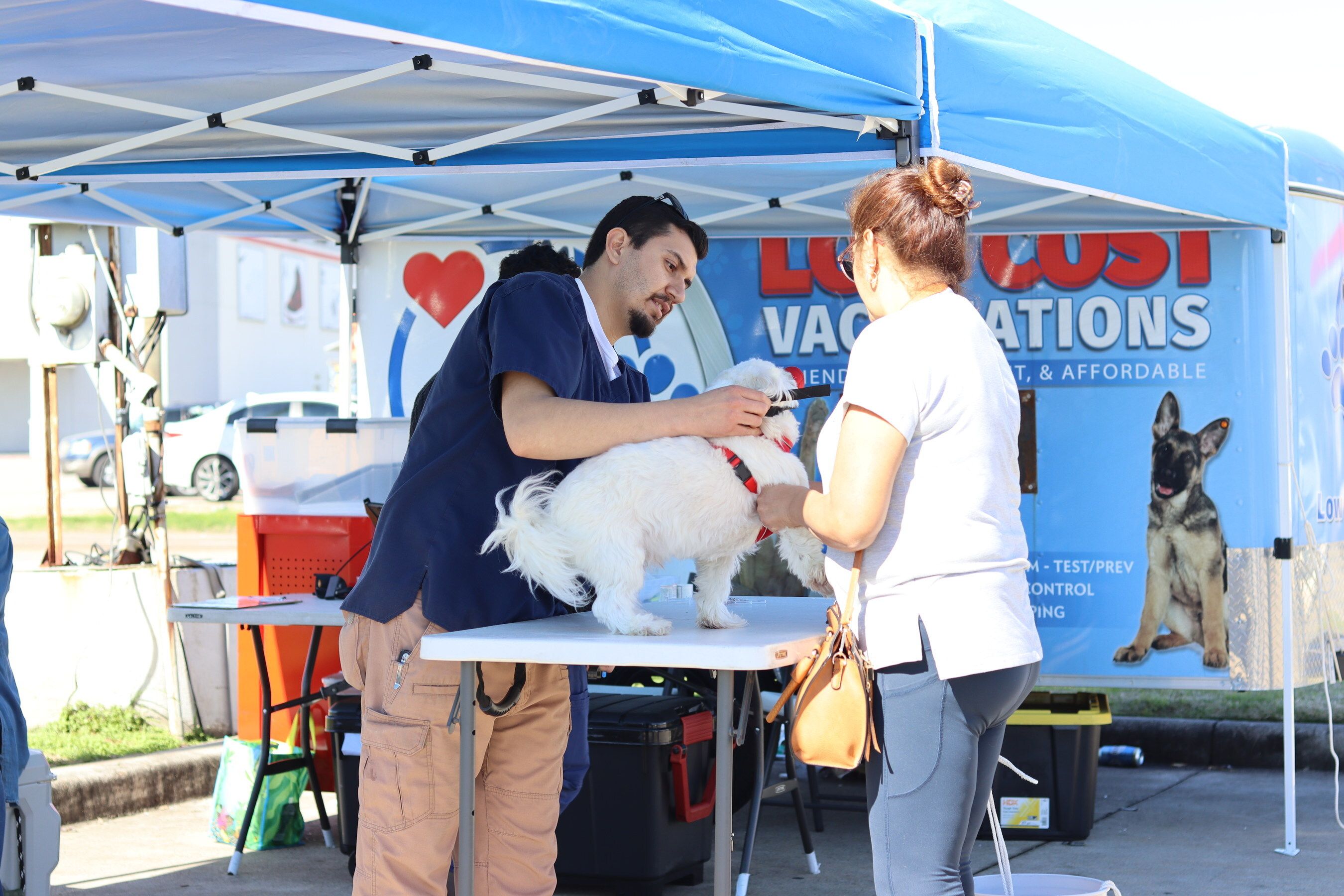
The concept was to add vet care to an existing human healthcare clinic, she said, because they’d seen that people would come in for the vet care. “Part of our [clinic’s agreement] is that people have to say hello to the nurse practitioner,” Ramirez said. “They don’t have to get human healthcare, but they have to at least engage in the conversation.”
It only took a couple of months for the clinic to go from once a month to twice, “and I bet we could be there more, if we had more capacity,” said Ramirez.
Diving into the data
To fully understand the impact of the clinic on YPEH, the study analyzed deidentified data from standardized forms at the One Health Clinic, as well as electronic medical records and veterinary records between 2019 and 2022.
Patient navigator at the One Health Clinic and postdoctoral fellow at the Center for One Health Research, Natalie Rejto, was the lead author of the study. She worked with Ramirez, Rabinowitz, veterinarians, doctors, medical students, and nurse practitioners who provided care at the clinic. And, she noted, they also had a co-author with lived experience of homelessness with animals.
“Something really wonderful I saw through the collaboration of so many co-authors was the energy and enthusiasm about this work,” Rejto said. Having so many varied experiences of working at the clinic paired with the data they collected helped to ensure a thorough representation of the clinic’s work.
For instance, take the follow-up appointment data. “We’re seeing that our clientele has increased by 32% this year, and there’s been a 19% increase in follow-up care for themselves, even on days when the clinic wasn’t occurring … and they were like, 19% is phenomenal,” said Ramirez. However, in looking through all four years of data, Rejto found that 85% of people came for human healthcare follow-up. “That was actually shocking to me,” Ramirez added.
Of course, those results don’t magically occur, and Ramirez attributes that increase in human healthcare follow-up appointments to the nurse practitioner on the human healthcare side of the clinic. “The difficulty is getting people into the door to access the human healthcare,” she said.
But once they’re there, she engages them—not by asking what’s wrong, but by asking things like whether they have a general practitioner and when they last saw them. If it’s been over a year, she might suggest doing a wellness check. If they don’t want care on that day, she’ll share what the clinic offers—and will phrase it as things perhaps they can tell a friend in need about, like STI screenings, pregnancy tests, or naloxone.
“It’s trust building,” Ramirez said. “I mean, that’s what the veterinary care team does on the front end. We spend the majority of our time rolling around on the floor with pitbulls and kittens, but what we’re really doing is creating a positive healthcare environment that they’ll be open to.”
Study conclusions
Two of the study’s key takeaways are:
- the human-animal bond may be an important strength among youth experiencing homelessness
- a One Health approach to healthcare may increase rates of health-seeking behaviors, preventative care, treatment, and accessing follow-up care.
It’s important to acknowledge that, while this study was specific to a population consisting of young adults experiencing homelessness, the model of care is extremely modifiable and could be applied to other patient populations that tend to struggle to access health care, like unhoused adults, the elderly, those in rural settings, and individuals in farming communities.
One Health and shared goals
Rejto also believes that their commitment to trauma-informed care and shared goals has made a difference.
“Even if they’re entering just for vet care, the whole team has that shared goal [of improving health for pets, people, and environment],” Rejto said.
That means it’s not solely about providing services in the same location, but about working as a team to link those services—and that means providing the human healthcare side with ways to connect with that pet parent through the veterinary care the pet received just minutes earlier, said Ramirez.
“Our team has a navigator, and the navigator fills out all those One Health forms. They go with the clients to the vet care visit, and then they go with the clients to the human health care visit,” she said. “They’re writing down clinically relevant things that come up in the vet care, and when they walk into the human healthcare clinic, they’ll say, ‘Oh, you know, Fluffy had a couple of infected flea bites, but otherwise was in super good health and just had some vaccines.’ Then, they can talk about, ‘Oh, do you have any infected flea bites on yourself? Or, do you need the flu vaccine?’”
This can also be an effective way to open a conversation about mental health. “It might be like, ‘You know, Fluffy was a little anxious during the appointment. Did you know that anxiety kind of goes back and forth on the leash?’” Ramirez said.
“That’s the one-two of amazing health care: we have care providers on both the vet side and the human health side,” she said. “Then we’re able to link that care to show them that, because they want to be good pet parents and they want affirmation for being good pet parents, they can be a better pet parent by, say, vaping away from the cat so the cat doesn’t keep coughing. Then they’ll take that step.”
Student involvement
Another important aspect of the One Health Clinic is the inclusion of veterinary students—and the type of training they require.
“My expectation is that they’re coming in with this baseline knowledge of preventative care,” said Katie Kuehl, DVM, Veterinary Healthcare Director at Washington State University. But to work effectively with this population, those students need to understand some of the unique challenges these folks might face in their day-to-day life, including reasons why young people might end up in a situation where they’re experiencing unstable housing—and the coping mechanisms they might use to deal with those traumas, she said.
Kuehl has her students complete a couple of asynchronous trainings: the Open Door Veterinary Collective’s module on relationship-centered care and Vancouver Humane Society’s module on trauma-informed care for animal welfare workers. “Both of those are kind of introductory, but nicely laid out. And it’s something the students can work on in their own time to start thinking about how these conversations might play out,” she said. “Then, when we get together in person, we can talk more about what this might look like for this population we’re dealing with.”
Curiosity instead of judgment is a major guiding force for the One Health Clinic team, and that includes avoiding making assumptions about the resources someone may or may not have—including things that are easy for housed people to take for granted, such as access to a refrigerator.
“Like, if I give you this Clavamox, will you be able to put it in a refrigerator between doses, or do I need to pick an antibiotic for this patient that they’re going to be able to keep at room temperature and have it still be effective?” Kuehl asked. “It’s a very simple thing, but not something you would necessarily think about in a regular practice.” Itchy dogs are another common scenario, where bathing the dog may not be possible (especially, she added, because many shelters specify that dogs are not to be bathed in their human showers). “Instead, how about a nice mousse?”
She also pushes her students to think about how they pose their questions, aiming for an open-ended approach, then working to come up with solutions whenever possible. For example, if they know someone will not be able to return for a recheck, the students will want to make sure the client knows what they need to watch for, as well as how to get in touch with the clinic if something’s wrong.
The experience of working with human healthcare professionals in this setting is something Kuehl hopes the students will take with them, wherever they go.
“It really highlights for them what being connected interprofessional in your career could look like,” she said. “When somebody opens up to you about food insecurity or domestic violence, we’re in a scenario in this clinic where we have the tools and the people there to connect folks with resources that are going to help them immediately or in the very near future.”
Of course, when working in a non-One Health clinic, those resources might not be available at that very moment or across the hall, but, Kuehl believes simply knowing what resources are needed is empowering. “When you go into practice, people are going to tell you things that might be upsetting, and if you have knowledge about what resources are available in your community, that empowers you as a practitioner.”
In addition to that feeling of empowerment, Kuehl shared some common feedback from many students at the end of their rotations. “Very consistently, I hear, ‘This clinic reminded me why I went through all this, and why I’ve been putting myself through the wringer to get this DVM degree. Thank you for reminding me why I’m here,’” she said. “That hits hard, right? It’s one of the reasons why I keep pushing for it and fighting for it and trying to make it happen. It’s why I want all students to be able to have these kinds of experiences.”
Going forward
Clientele at the Seattle One Health Clinic included in this study are, for the most part, 25 and under, but Ramirez said that this year they started a clinic in an all ages, mostly adult setting, and they’re already seeing different healthcare concerns. “The trauma is still there, but the length of trauma is substantially longer. And we’re looking at chronic disease versus, you know, STI screenings,” she said.
They anticipate the different demographics to also influence the type of care the pets need. “Within the youth and young adult populations, the majority of the pets are younger and healthier,” she said. So for them, wellness checks and vaccinations are most common, but among an older population with older pets, they expect to see more things like Chihuahua dentals.
But the bigger goal isn’t just to reach more populations in the Seattle region. The greater hope is that this model is used to create similar One Health Clinics all over the country, or even beyond.
“We created a free toolkit to help replicate the model,” Ramirez said. “We do free technical assistance and technical support to get those clinics started. We have quarterly coffee hours to troubleshoot anything that comes up. And we’re available to have the conversations—because usually, it’s convincing the human health side that this is of value. The veterinary side kind of already gets it.”
That support includes connecting their federally qualified health centers and having doctors available to talk to those just starting up. Still, Ramirez said, it’s important to remember that other areas may need to alter their approaches based on the specific needs of their populations.
“Seattle is ridiculous; it has more dogs than children, and more cats than dogs,” she said. “So, there’s a number of free veterinary resources here. Everyone has an animal, and the animals are their children. It’s the norm—but I don’t know if that’s the same in Albuquerque or, you know, rural Nebraska.”
But she hopes that, since they know their own region so well and have collected so much data, they can use that experience to help other sites to collect and analyze their own data.
As of now, Ramirez says they’ve helped the public health department in Tuscon start a clinic, which is more of a health fair model, but including navigators. They also helped New York City with a clinic out of a housing unit, and earlier this year, they assisted Minnesota start up a pilot program.
“About 250 people [nationally and internationally] have signed up for the toolkit,” she said, “and everyone is at a different stage… There is a lot of interest, and we hope to help folks that still have siloed care to integrate—because there’s a lot of side-by-side care in different cities across the country, but we’d like to see them really taking that One Health approach, where you’re considering the environment that the folks are living in, with the human and animal health together.”
Further reading:
Lead photo credit: Gemina Garland-Lewis
Disclaimer: Trends™ content is meant to inform, educate, and inspire by providing an array of diverse viewpoints. Any content published should not be viewed as an official stance, position, or endorsement by the American Animal Hospital Association (AAHA) or its Board of Directors.
link