Jacksonville-based Community Hospice services extend to patients’ pets


Hospice in Jacksonville provides peace of mind to patients and pets
Pet Peace of Mind program gives pets another another home after owners pass away while in hospice care.
- Community Hospice & Palliative Care’s Pet Peace of Mind program finds new homes for pets of hospice patients.
- The program provides pet care services such as dog walking, feeding, and veterinary care while owners are in hospice.
- Volunteers work to find “fur-ever” homes for the pets after their owners pass away.
When his owner died in hospice care, Choncho the dog was 14 and deaf and had been diagnosed with stage three kidney disease.
For a time, his future looked bleak.
But the end-of-life services Community Hospice & Palliative Care provides for its patients includes finding new homes for their pets. Through the Jacksonville-based nonprofit’s Pet Peace of Mind program, Choncho was adopted by hospice staffer Pamela LaPete.
Her husband said the black and white terrier mix looked like the RCA dog.
“I fostered him for a month before adopting to make sure my husband and our dog, Dora, would accept him. Choncho … and Dora were both 14,” LaPete said. “We lost Dora and Choncho within two months of each other about a year and a half later.”
When Dora died, Choncho “looked all over the house and the yard for her. I think that was a part of his decline — missing Dora,” she said. “I feel that we gave Choncho a good home and quality of life for his last days.”
Volunteers step in as temporary pet handlers
The Pet Peace of Mind program aims to keep patients receiving end-of-life care and their pets together as long as possible, even bringing their pets to visit them in hospice facilities. Many of those patients are more concerned about their pets’ health and welfare than their own.
“There are occasions where the pet is the only family our patient has. This is their reason to get up in the morning,” said Chris Whitney, volunteer coordinator for the program. “There have been patients who are unable to care for themselves but refuse to leave their homes until their pet is taken care of.”
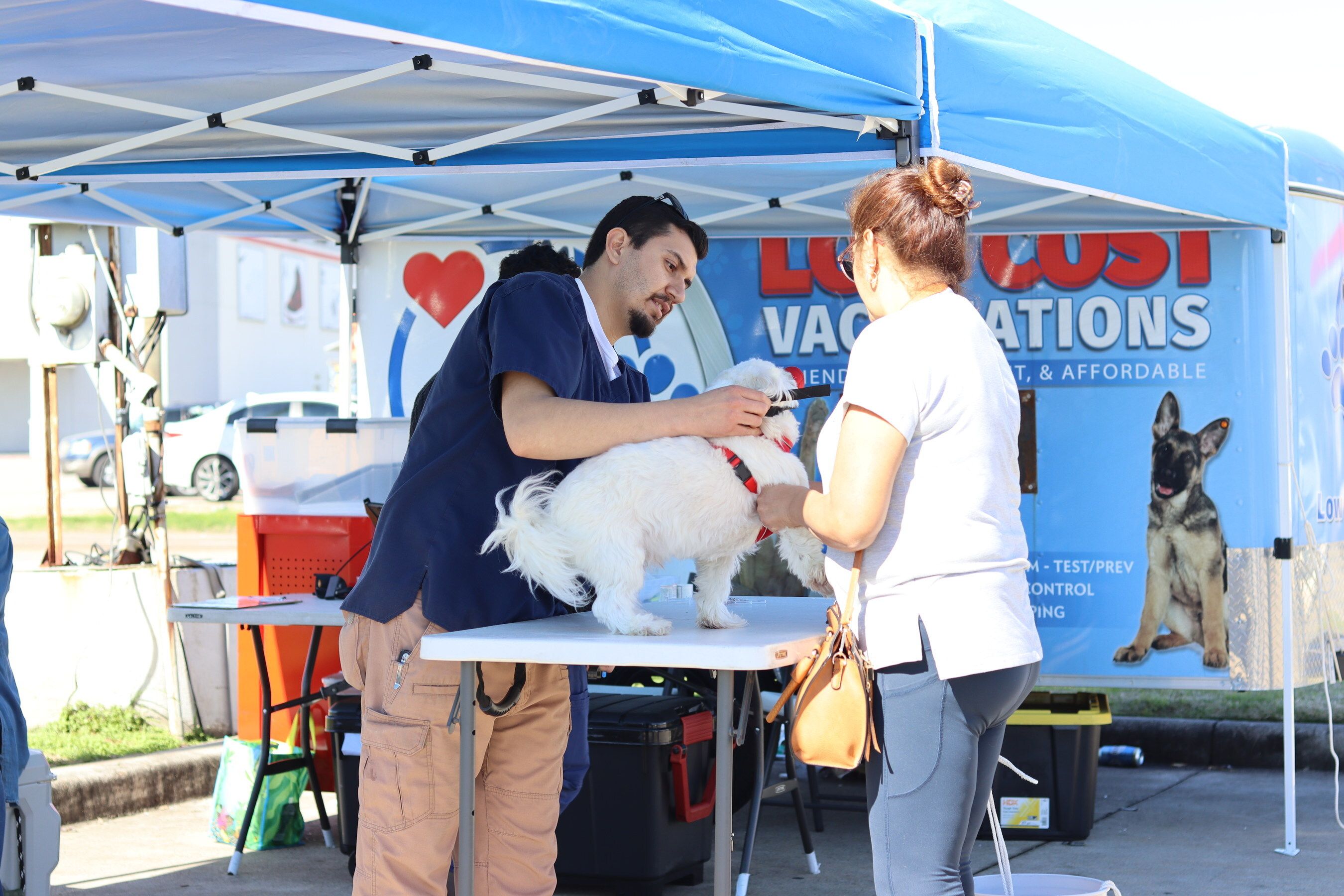
To ease their minds, volunteers provide dog walking, feeding, waste cleanup, transportation to veterinary appointments or grooming sessions. If there is a financial need, the program provides a one-time supply of pet food and covers the cost of an annual exam and vaccines.
“Hopefully a family member or friend will adopt the pet, and having the vet care up-to-date should lessen the expenses an adopter might worry about incurring,” Whitney said.
The program continues after the owners die or, because of their failing health, have to relinquish their pets. Community Hospice boards the cats and dogs with local veterinarians — at no cost or at discounted rates — and works to find new homes for them.
“The patient is the one who decides when the pet is to be re-homed. This is the hardest part of the job — taking a pet from their life-long home,” Whitney said. “There have been times when the family feels that giving up the pet means giving up their last connection to the patient, but for a variety of reasons, they are unable to keep the pet. I admit to crying a few times myself, once I’ve gotten into my car.”
But she assures the patient they will “find a wonderful fur-ever home for their pet.”
Program eases patients’ and their families’ pet worries
When Courtney Heavener’s Aunt Margaret entered hospice care, the fate of her relative’s beloved dog and three cats rested on her shoulders.
“They were her entire world. She loved them so much, they were like children to her since she didn’t have any children,” she said.
Heavener adopted the dog, but sought help from Pet Peace of Mind to find homes for the three cats. Two of them have since been adopted; the third, Piebald, is still available.
For her and her aunt, who died in January, knowing the pets were in good hands “provided a sense of peace knowing that they would have a home,” she said.
“I am so very grateful,” Heavener said. “I could not take in all the animals since I’ve already taken her dog and I know that it was so important for her to make sure they had loving homes.”
The LaPetes’ grieved over the loss of Choncho and Dora until Whitney asked if they would adopt another pet, an 8-year-old Yorkie named Tucker. They said yes.
Helping both the patient and pet survive losing each other is gratifying, LaPete said.
“The pets need peace of mind also after the loss of their owner and life as they have known it,” she said.
Pet visits can be life-changing for patients
A woman in short-term, intensive inpatient care “had been declining for weeks, [her] energy fading and conversations had grown quiet,” Volunteer Services Manager Ashley Howell said. “But the moment she heard the familiar jingle of the collar and saw her furry friend walk through the door, everything changed. The patient’s eyes lit up, a smile spread across her face and she reached out with arms full of love.
“For those precious moments, illness disappeared, and what remained was pure connection,” she said. “That single act of kindness transformed the atmosphere for everyone, the patient, their family and even the staff who witnessed it. It reminded me why hospice care is so much more than medical comfort. It’s about honoring what matters most in life. The love, relationships and the small joys that bring peace in the final days.”
Another pet visit followed a long-term care patient taking a downhill turn. When his social worker requested a visit from his dog, Whitney agreed and brought the pet to the patient’s room.
The patient was unresponsive “until his dog, Archie, joined him on the bed. The patient’s hand was placed on Archie’s head and he began to pet him bringing about a small smile and an attempt to open his eyes,” Whitney said.
The dog stayed with his owner for a while then departed. Within the next 3½ hours, the patient had died.
“Staff all said he had been waiting to see Archie one more time,” Whitney said.
Program has found new homes for almost 200 pets
Community Hospice’s Pet Peace of Mind program is part of a national initiative begun in 2012 by the PetSmart Charitable Trust. It has since become a separate nonprofit.
To date, the Jacksonville-based program has helped re-home 91 dogs and 103 cats and provided medical care and food for other pets. The pets with new homes included large breeds, such as pit pulls and a great Pyrenees; small dogs including chihuahuas and shih tzus; and a wide variety of cats, including a Tonkinese, Bengal and a few Siamese, Whitney said.
“There’s always a sense of relief and joy when a pet is placed into a new home. It’s the best part of my job,” she said. “These pets are usually of a ‘mature’ age and were loved by their previous owners who can no longer care for them. Placing them in a home where that love and care will continue on is a great feeling.”
She often checks in with the pets’ new families and asks for pictures.
“The contented look on the pet’s face when they are with their new families is precious,” Whitney said.
To foster or adopt a pet or get more information, contact Whitney at (904) 407-5204 or go to communityhospice.com/info-for/volunteers/pet-peace-of-mind.
Established in 1979, Community Hospice has served nearly 220,000 adults and children in Baker, Clay, Duval, Nassau and St. Johns counties. It recently expanded its service area to include 11 counties in north central Florida, including the Gainesville, Lake City and Palatka areas.
[email protected], (904) 359-4109
link